

Is Israel's Draft Over?
Israel is building an army the Knesset has not caught up to yet.

If you’re new here, most of my writing lives in shorter Notes throughout the week.
Once a week, I share something different.
A piece of a book I’m writing in public.
Somewhere in southern Lebanon this week, a gun fired itself.
Not entirely. Three soldiers were inside. One designated the target. The system did the rest. It selected the shell. It loaded the shell. It laid the barrel. It fired. Eight rounds per minute, from inside an armored cab, with no one standing in the open, no one loading by hand, no one exposed to counterbattery fire in the seconds between shots. The gun then relocated within sixty seconds, before the enemy could calculate its position and respond.
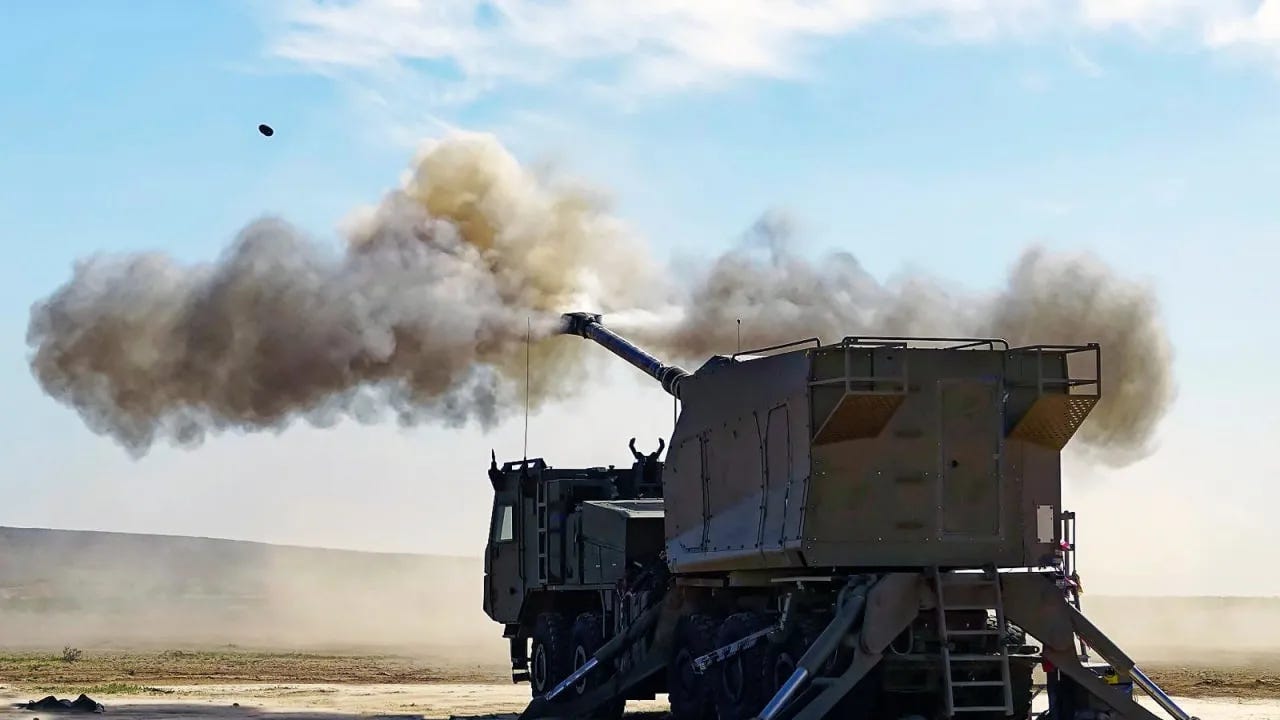
The weapon is called the Ro’em. It is a 155 mm self-propelled howitzer built by Elbit Systems, and in April 2026 it fired its first operational rounds against Hezbollah positions in the northern theater. The 282nd Fire Brigade used it. Three people. One cab. Fully automated ammunition selection, loading, laying, and firing.
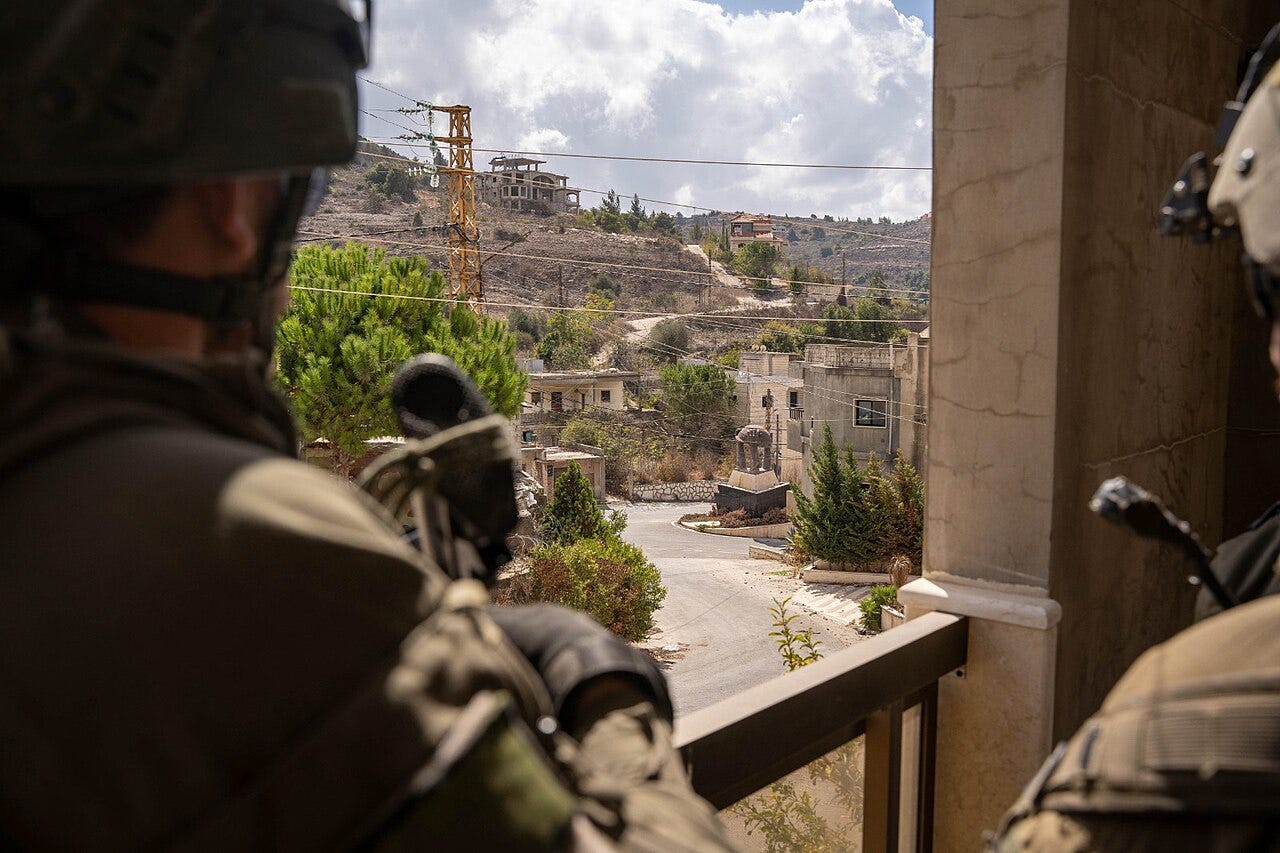
While the Ro’em was doing that, a different unit was sending robots into Hezbollah tunnels in Bint Jbail. The tunnels are in mountainous terrain that limits heavy equipment. The robots went in instead of soldiers. They photographed the infrastructure. They destroyed it. No one had to follow them in.
Israel has been fighting with machines before. But something shifted this month. The IDF confirmed that the AI infrastructure developed during the Gaza war is now fully operational and active in Lebanon. Robots are being deployed in higher volumes and greater variety than at any prior point in Israeli military history. The systems are more standardized, more diverse, and more integrated into the digital command architecture than they were even two years ago.
The colonel who runs the AI and Autonomy Program Executive Office of MAFAT, the Israeli defense research authority, said it plainly: we are only at the beginning of this revolution.
That sentence deserves more attention than it has received.
Because while the IDF is quietly building an army organized around automation and precision, the Knesset is still arguing about yeshiva students.
The Haredi draft crisis has been running for years. In June 2024, the Supreme Court ruled unanimously that the legal framework allowing blanket military exemptions for ultra-Orthodox yeshiva students had expired. The state was obligated to begin drafting them. The court ordered it. The government largely ignored it.
By mid-2025, 19,000 draft summons had been issued to Haredi men. Approximately 5 percent reported to induction centers. About 1.2 percent were actually conscripted.
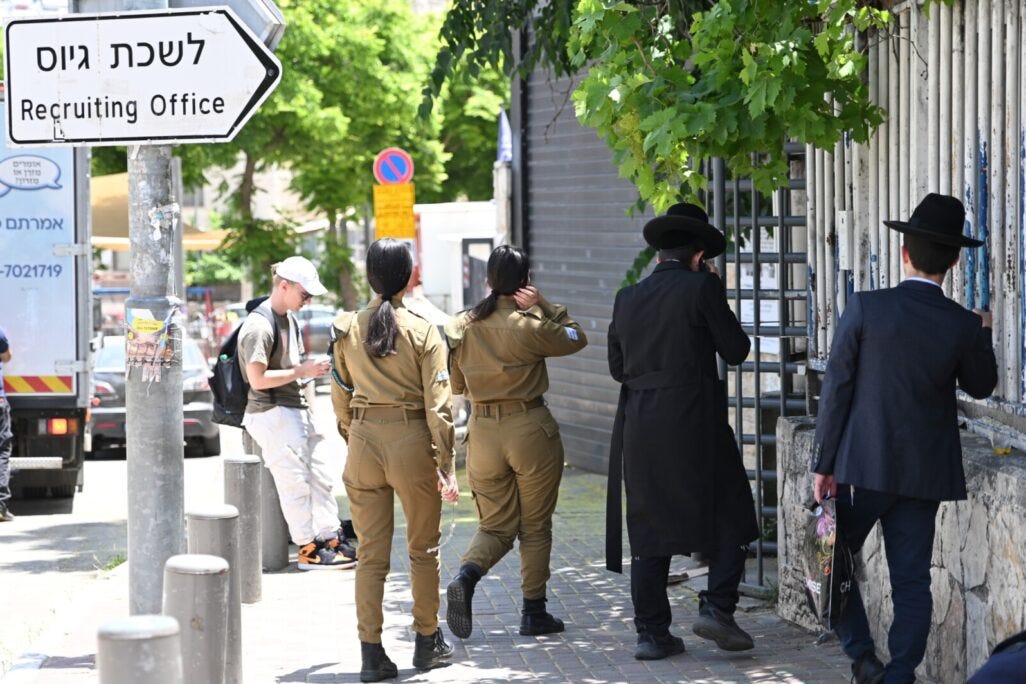
In November 2025, the Supreme Court unanimously ordered the government to produce criminal sanctions against draft dodgers within 45 days. The Attorney General told the court the government was actively violating the ruling. The government continued to stall.
The political argument has been almost entirely framed as a question of religious exemption and civic equality. Who owes what to the state. Whether the Torah study of yeshiva students constitutes a form of national service. Whether the burden of defense falls equally across Israeli society.
These are legitimate questions. They are also, increasingly, the wrong questions.
Because here is what the political argument is missing.
Every time Israel goes to war under the current model, it pulls its most economically productive citizens out of the economy. Not the unemployed. Not the marginal workers. The engineers. The developers. The founders. The people running the companies that generate the GDP that funds the military that needs the engineers.
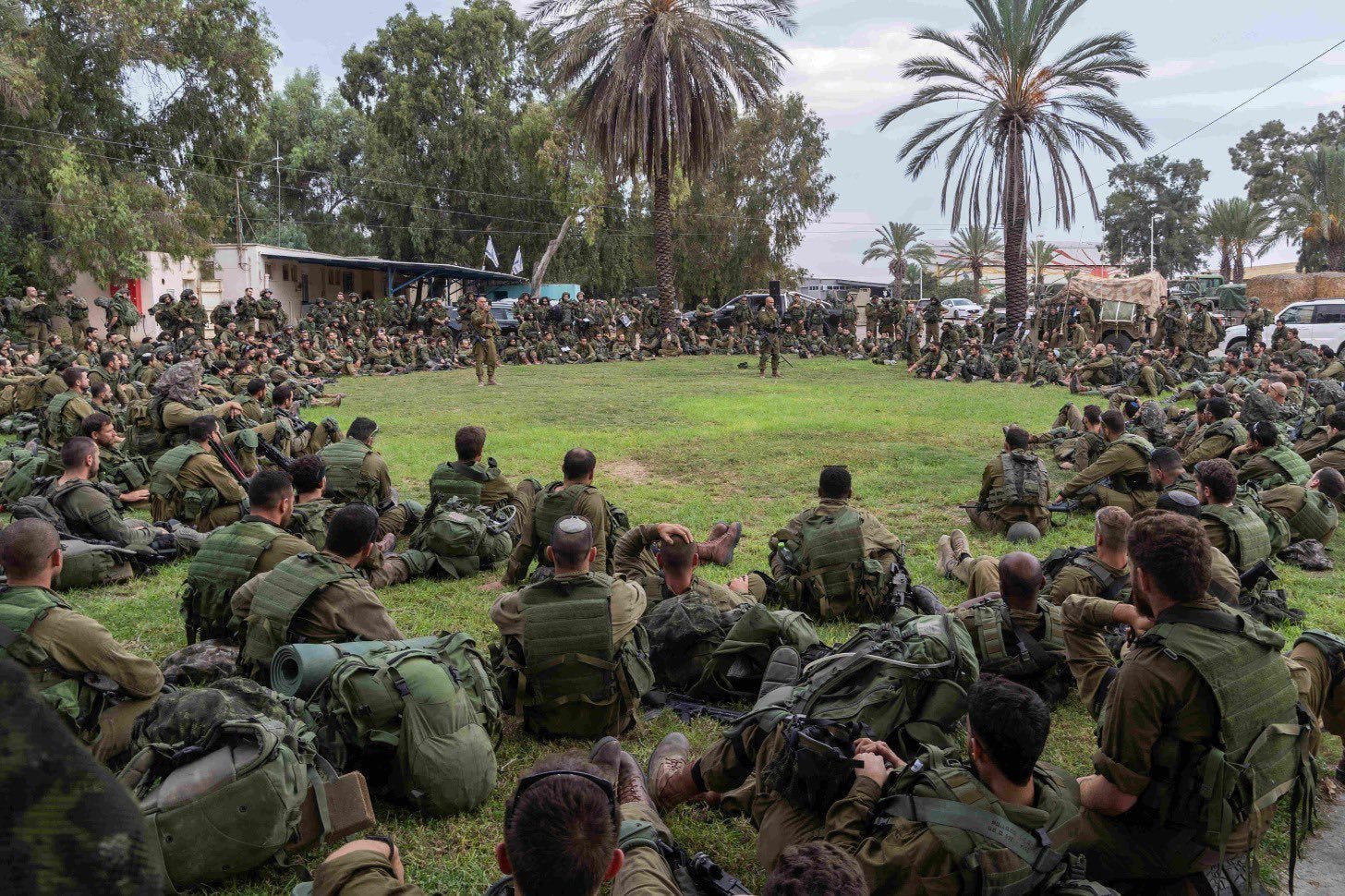
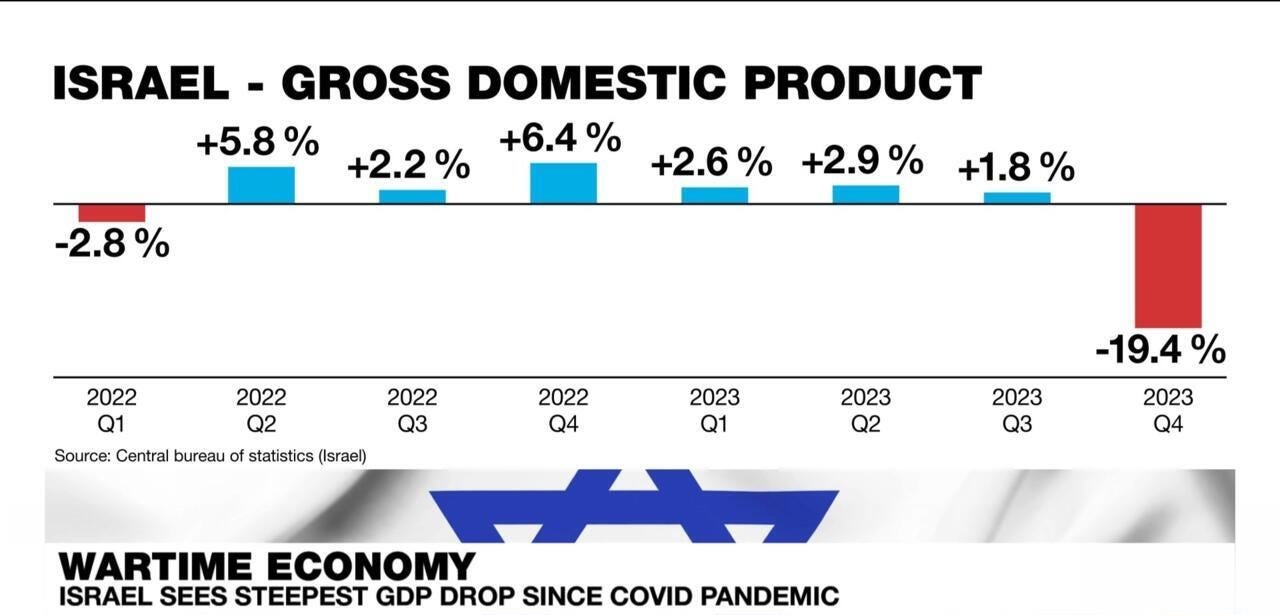
In the first three weeks after October 7, the Bank of Israel calculated that the absence of workers was costing the economy approximately 2.3 billion shekels per week, roughly $600 million, about 6 percent of weekly GDP. That was before the full scale of the mobilization was clear. Before the numbers settled at 300,000 reservists called up. Before the economy contracted by approximately 20 percent in the fourth quarter of 2023, driven largely by that mobilization.
A 2024 Ministry of Finance study found that the economic cost of a single reserve soldier runs approximately 48,000 shekels per month. Multiply that by 300,000 and hold it for eighteen months and you have a number that explains, better than any political analysis, why Israel’s debt-to-GDP ratio climbed from 60 percent to 69 percent in less than two years.
The high-tech sector, which accounts for more than half of Israeli exports and roughly 20 percent of GDP, was built primarily by the same demographic that fills the reserve lists. Young men aged 21 to 45. The startup founders, the unit 8200 veterans, the engineers at the companies that foreign investors were betting on before the war. Nearly 50,000 businesses went bankrupt during the war period. Forty-two percent of transactions between Israeli companies and foreign investors declined in 2024 compared to the previous year.
This is the cost of the current model. The draft is not free. It has never been free. We have just been paying it in a currency that does not show up cleanly in the defense budget.
Now consider what changes if the ratio shifts.
The Ro’em does not need a crew of eight. It needs three. It fires four times faster than its predecessor. It relocates in under a minute. It receives targets directly from intelligence systems and command centers without a human intermediary in the fire chain. One battery does the work that previously required more guns, more crews, more trucks, more logistics, more bodies standing in the open while shells fly.
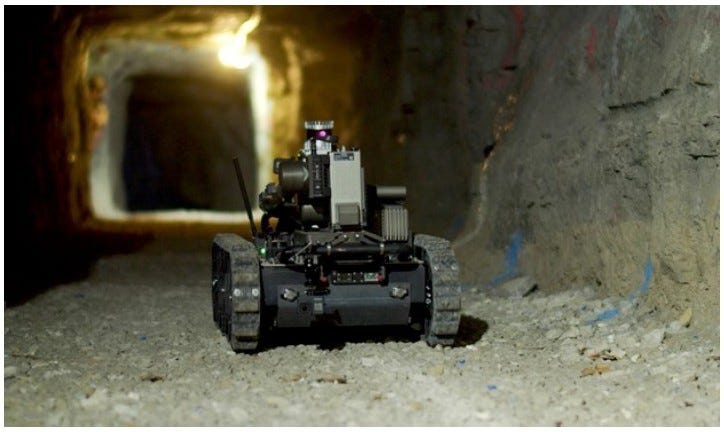
The robots in the tunnels do not replace the engineers who plan the operation. They replace the soldiers who would have walked into the tunnel first.
The AI systems managing the digital fires architecture, the ones tracking launches, integrating drone feeds, deconflicting airstrikes from ground operations in real time, do not replace the commanders making decisions. They compress the time between intelligence and action, which means fewer opportunities for the enemy to respond and fewer windows in which Israeli soldiers are exposed.
None of this means the infantry soldier disappears. Israel has always known what close-quarters fighting costs, from the alleys of Jenin to the tunnels under Rafah. The soldier who goes in first, who holds the position, who carries his wounded out, that soldier is not being replaced by a robot or a gun that loads itself. He is being supported differently. The question is not whether Israel still needs courage. It always will. The Rambo-type soldier, the one who closes with the enemy in the dark, is not obsolete. He is irreplaceable. He always will be. But he needs to be used where only he can go, not where a machine can go instead.
The question the Knesset is not asking is what happens to the reserve burden when that ratio changes. If the next significant conflict requires two thousand drone operators, three hundred Ro’em crews, and a corps of AI systems engineers instead of three hundred thousand reservists, the economic equation transforms entirely.
Not eliminated. Transformed.
The IDF has already been moving in this direction for decades. Since the 1980s and 1990s, the IDF’s overall manpower and number of divisions have been cut roughly in half. The army has grown more lethal, more precise, and smaller in headcount simultaneously. That trajectory did not reverse after October 7. It accelerated.
What October 7 did was expose the cost of the old model under extreme conditions.
Three hundred thousand reservists pulled from the economy at once. The construction sector down by a third. Agriculture down by a quarter. High-tech operations disrupted. Reserve soldiers receiving nearly double the average Israeli salary in compensation payments, a total of 60 billion shekels in the first eighteen months alone, while the businesses they left behind bled or closed.
The Haredi draft debate asks: who should bear this burden? The automation question asks: how much of this burden is actually necessary?
Those are different questions. Israel is currently answering the second one on the battlefield while the first one stalls in court.
The shift also raises a question about what kind of soldier Israel will need to recruit and train in the next generation of conflicts.
The operators of autonomous systems, the people who manage drone swarms, who maintain robotic platforms in the field, who integrate AI targeting data into a firing solution, are not the same as the people who ran ammunition to an M109 by hand. They require a different profile. Technical fluency. Precision under pressure. The ability to operate complex systems in degraded conditions. Sustained concentration over long periods without physical exertion as the primary demand.
That profile, it is worth noting, is not entirely different from the profile produced by a life spent in intensive study and intellectual discipline.
That is not an argument for Haredi exemption. It is an observation about what the army of the 2030s will need from its people. The debate has been stuck on whether Torah study is equivalent to military service.
The more interesting question is whether the IDF of the future needs people who have spent years building a different kind of precision, and whether the current model of mass conscription is even the right tool for finding them.
I know this cost personally.
I turned professional at seventeen. Basketball. I was part of a large class of Israeli talent coming up through the system at the same time. The top tier got athletic exemptions from active duty, the kind that mean you show up to a desk for a few hours and train the rest of the day, career intact, trajectory preserved. I was second tier. Not quite high enough on the list to qualify. I served three full years.
By the time I was done, the window had moved. Significantly.
Not the NBA. That was never the realistic question. But a longer professional career locally. A different arc. Momentum that, once interrupted for three years at the age when athletes make their developmental leaps, does not simply resume. I accepted it because you accept it. That is what the country asks and you say yes. It asks more of some people than others, and you know it, and you say yes anyway because the alternative is a country that does not exist.
But I have always known what the yes cost me. And I have always wondered what it cost Israel, multiplied across every interrupted career, every delayed company, every startup that did not get founded, every year of productivity that went into a uniform instead of an economy.
The draft is not free. The people it takes are not interchangeable with people who were never going to serve anyway. They are the ones building the country that needs defending.
The Knesset is fighting about yeshiva students while three soldiers in an armored cab do the work of an entire battery.
The courts are ordering arrests of draft dodgers while robots tunnel through Hezbollah bunkers in Bint Jbail.
None of that means the draft is over. Israel is not Switzerland.
The threats are real and they are not becoming theoretical anytime soon. But the model of pulling your most economically productive citizens out of the workforce every time the sirens sound is a legacy system, and legacy systems do not survive contact with better technology indefinitely.
The question is not whether Israel still needs an army. It does. The question is what kind, how many, and whether the politicians arguing about equal burden-sharing have done the math on what equal burden-sharing would look like if the burden itself were a tenth of its current size.
If the next war requires precision operators and AI engineers instead of mass mobilization, Israel’s financial immunity during conflict changes completely. The economy stays running. The companies stay open. The founders stay at their desks. The startups do not close. The reservists do not come home to businesses that failed while they were gone.
That is not a fantasy. It is the direction of travel. It is already happening in the northern theater, one automated round at a time.
The Knesset might want to look up from the courtroom and notice.
Sources: IDF Spokesperson Unit, first operational firing of the Ro’em howitzer, April 2026; Breaking Defense, Israel’s New Automatic Ro’em Howitzer Used for First Time in Combat, April 2026; Algemeiner, IDF Unveils AI-Powered Robotic Warfare System, Breakthrough Artillery Against Hezbollah, April 2026; Elbit Systems, SIGMA self-propelled howitzer technical documentation; Elbit America, SIGMA product literature; Bank of Israel, weekly economic cost assessment, October 2023; Bank of Israel, Governor Amir Yaron statement on Haredi draft economic cost, October 2024; Israel Ministry of Finance, economic cost of reserve soldier study, 2024; Jerusalem Post, Debt, Defense, and Disruption: The True Cost of Israel’s Multi-Front War, 2026; Institute for National Security Studies, Three Events, One Concern: A Threat to Israel’s Economy, April 2025; Times of Israel, War is Costing Economy Some $600M a Week, November 2023; Israel Democracy Institute, Haredi draft compliance data, 2025; Supreme Court of Israel, ruling on Haredi military exemptions, June 2024; IVC Research Center, Israeli high-tech investment decline data, 2024; Start-Up Nation Central, survey of Israeli high-tech companies, 2024.
If this resonated, you can follow the full arc as it unfolds.
I share:
Daily Notes on Israel, Jewish identity, and moral clarity
Weekly “Echoes” from the book itself
Very interesting angle. I would like to reiterate the question from above - concerns about the use of AI and tech in warfare… But the other dimension of this discussions is the economic cost of Yeshiva students to Israel’s economy overall. It’s more than just the draft dodging question. If you pursue the argument of AI and tech takeover in the theatre of war, everything stays the same - the ones already contributing continue to contribute to Israel’s economy and the ones that don’t, don’t.
Absolutely fascinating. Wartime applications are some of the best examples of coding assignments that I can think of where you really **want** AI to be doing the work. I tend to think of AI and most automation as making human labor and therefore human beings worthless and for that reason, when I was an engineer I refused to have anything to do with AI. But this kind of AI, fantastic; I would have jumped at the chance to work on software like this that would save soldiers' lives.
That said, the technology does not let the haredim off the hook. You hinted that the kind of sustained, precise concentration that goes into Torah study is well-suited for this kind of development, but it would take workers with a strong mathematical background, and a lot of yeshivabochers don't have that. They could get it — when I decided at 31 to learn computers I had forgotten all my math and locked myself in a room for a couple of months and taught myself everything from advanced algebra to calculus 3. But you have to want to learn it. The haredi community disincentives for serving in the military might preclude this kind of thing. I have heard that there are a **lot** of haredi women in software and that totally makes sense to me, I just think it would be nice if the men were to step up to the plate.