
The Second Echo: The Last Breakfast
The table where silence was first served.

Olek got up early that morning. Not because he couldn’t sleep—though he hadn’t—but because this might be the last morning he would ever see his kids.
They were living in Krakow, Poland. It was 1938.
He wanted to make breakfast for everyone—something warm. Something memorable.
His wife, Berta, had left a while back, right after their son Michael died unexpectedly at the age of two.
Vladislava, a family friend, had stepped in to help with the children: Edward, five, and Giza, two. She was Catholic, but sympathetic to the rise of antisemitism across Poland. She wanted to help.
That morning, they all slept in. Everyone but Olek.
He’d bartered for fresh tomatoes from a neighbor’s garden.
Eggs from another who still kept a few hens.
Oranges from the market.
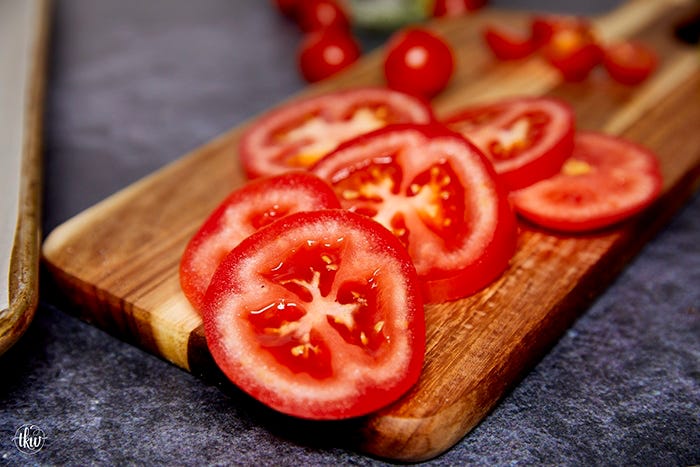
He made omelets. Sliced tomatoes. Squeezed juice until his hands ached.
Olek wanted this to be the best breakfast they’d ever had.
The last breakfast.
Ogórki kiszone—his famous pickled cucumbers—were sliced thin and fanned across each plate like a green rainbow. Eggs, scrambled to perfection. Toast, browned just right. The air smelled faintly of butter and vinegar.
The children were leaving with Vladislava that day.
Life in Krakow had become utterly unsafe for Jews, and Olek could read the writing on the wall. He had lost contact with his siblings and his parents. Even Berta, his ex-wife, could not be reached.
As they ate in silence, Vladislava and Olek locked eyes.
“Thank you for trusting me,” she said.
Olek nodded before turning to Edward.
“You’re going to be a good, brave boy, right?”
“Yes, Dad,” he said, biting into a piece of toast.
“And listen to Vladislava. Take care of your little sister, you hear?”
“Yes, Dad,” he repeated, not fully grasping the moment.
Their bags were packed by the door. There was no time to waste.
Olek watched as they stepped out into the cold together, feet dragging across the cobblestone. As they disappeared around the corner, he wondered if they would ever be together again. If Edward would grow up to be a father himself. Whether he’d had enough time to leave a mark on him—or if his son’s voice would become just another one muffled by the German war machine.
My father’s early morning routine is burned into my memory.
He would wake up at 5:30 a.m. I would try to wake up with him, just to steal a moment. Between school and my basketball schedule, I barely saw him during the week.
He was always working, always tired, and I felt like I had to fight for his attention. Like an invisible person trying to prove he was actually there, I did whatever I could to be noticed. I tried to take interest in his projects, begged to tag along whenever he let me, and shadowed him constantly.
Often, I was his unwanted shadow.
Those ten early morning minutes were my window into his world—the one he never invited me into.
He’d get dressed, then make his coffee. Black, no sugar. I still remember the smell.
Then breakfast—always the same. Tomatoes sliced so thin you could see through them. I once saw him hold one to the light, inspecting it like it owed him something. Judging by the look on his face, it didn’t pass.
I felt bad for the slice of tomato.
He never raised a hand to me. But disappointing him cut deeper than any bruise. It made me feel small. Invisible.
Then came the toast.
This was the ’90s—no fancy toaster settings. Just press and pop.
But he always timed it perfectly. A few seconds before the pop, when the bread hit that perfect shade of golden-brown, he’d pull it out.
The crunch was always the same. I can still hear it.
He’d spread a paper-thin layer of butter. Scramble two eggs. Plate everything just so. He fanned the tomato slices like a chef plating for no one. Sprinkled salt. Sat down. Read the paper. Took his time. Every now and then, he’d glance my way and almost smile—as if remembering he wasn’t alone in the room.
It was the last time in his life he would feel a true sense of calm.
I gave him a hug goodbye. Watched him get into his car.
What came back from work that day wasn’t my father.
I didn’t know it then, but I was watching an echo—not an accident. Olek had stood in a kitchen half a century earlier, slicing tomatoes and pickled cucumbers for children he couldn’t save. My father stood in ours doing the same, trying to put a little order into a world that was already collapsing around him. Their rituals were identical because their fear was the same. The silence my father carried into our home didn’t begin with him. It began in Krakow, in that last breakfast, with a man I never met trying to give his children one moment of normal before everything fell apart.
On October 7th, 2023, I heard that echo again—only this time, I understood what it was.
It wasn’t fear.
It wasn’t helplessness.
It was inheritance.
The next morning, at breakfast with my own children, it became clear. Three generations of men preparing breakfasts for children they might not get to protect. Three generations trying to impose a little order on a world that kept insisting they didn’t belong in it.
My father never explained the silence he carried. He couldn’t. He didn’t have the language for it. Olek didn’t either. They survived by shrinking, by bending, by disappearing—doing whatever it took to keep the people they loved alive, even if it meant erasing themselves in the process.
I lived most of my life the same way. Quiet. Careful. Unseen. Shrinking who I was so as not to attract too much attention. Invisibly Jewish.
But watching my own children eat breakfast in a country where Jews were suddenly being told to disappear again, I felt something shift. Not loudly. Not defiantly. Just undeniably.
I understood that survival isn’t the same as living.
And silence isn’t the same as safety.
I may not be able to rewrite their stories.
But I can choose how mine continues.
I’m no longer hiding.
Not from the past and not from the world.
Not anymore.
The generational trauma is palpable. My prayers and peace for it to stop once and for all. No words just truth, peace and unconditional love for all beings. Your writing is the hidden weapon for awareness.
So beautifully written and poignant. Thank you for sharing these moments. Deeply resonant....